The bridal makeup industry offers exciting career opportunities for individuals passionate about beauty, creativity, and makeup artistry. With brides seeking personalised looks that complement their outfits, skin tones, and preferences, the demand for skilled bridal makeup artists continues to grow.
However, building a successful career requires professional training, practical experience, and knowledge of different makeup techniques. Enrolling in the right makeup courses in Ludhiana can help aspiring artists develop essential skills, gain confidence, and learn techniques such as HD makeup, airbrush makeup, and professional bridal looks.
But how do you choose the right bridal makeup course? This guide covers the key factors to consider, including course curriculum, practical training, duration, certification, and career opportunities..
1.Understand Your Career Goals Before Choosing a Course
Before enrolling in any makeup training programme, take some time to understand your career goals. Not every makeup course offers the same level of training or specialises in the same techniques. Some courses focus on basic makeup application, while others provide comprehensive training in professional and bridal makeup artistry.
If your primary goal is to become a bridal makeup artist, choose a course that provides specialised bridal training rather than a programme that only covers basic everyday makeup.
Having a clear career objective will help you select a course that matches your professional expectations.
2. Check the Makeup Techniques Covered in the Course
One of the most important factors when selecting a bridal makeup course is its curriculum. A professional training programme should cover multiple makeup techniques so that students can work with different bridal preferences, skin types, and wedding requirements.
Here are some essential techniques to look for:
HD Makeup
HD makeup is designed to create a smooth, natural-looking finish that appears well-blended in photographs and videos. It requires proper product selection, blending techniques, and an understanding of skin texture.
Airbrush Makeup
Airbrush makeup involves applying foundation and other products using specialised airbrush equipment. It can create a lightweight and even finish when applied correctly.
Traditional Bridal Makeup
Traditional bridal makeup focuses on creating customised looks based on the bride's outfit, jewellery, skin tone, and personal preferences.
Party and Engagement Makeup
A professional bridal makeup artist should also understand engagement, cocktail, reception, and pre-wedding makeup styles.
Eye Makeup Techniques
Eye makeup is an essential part of bridal styling. Students should learn techniques such as:
-
Smokey eye makeup
-
Cut crease makeup
-
Shimmer and glitter application
-
Winged eyeliner
-
Eyeshadow blending
-
Natural and soft glam eye looks
A course covering these techniques can help students develop versatility and handle different makeup requirements confidently.
3. Prioritise Practical Training Over Theory
Makeup artistry is a skill-based profession. Although theoretical knowledge is important, practical experience plays a major role in developing professional expertise. When comparing different bridal makeup courses, check how much time is dedicated to hands-on training.
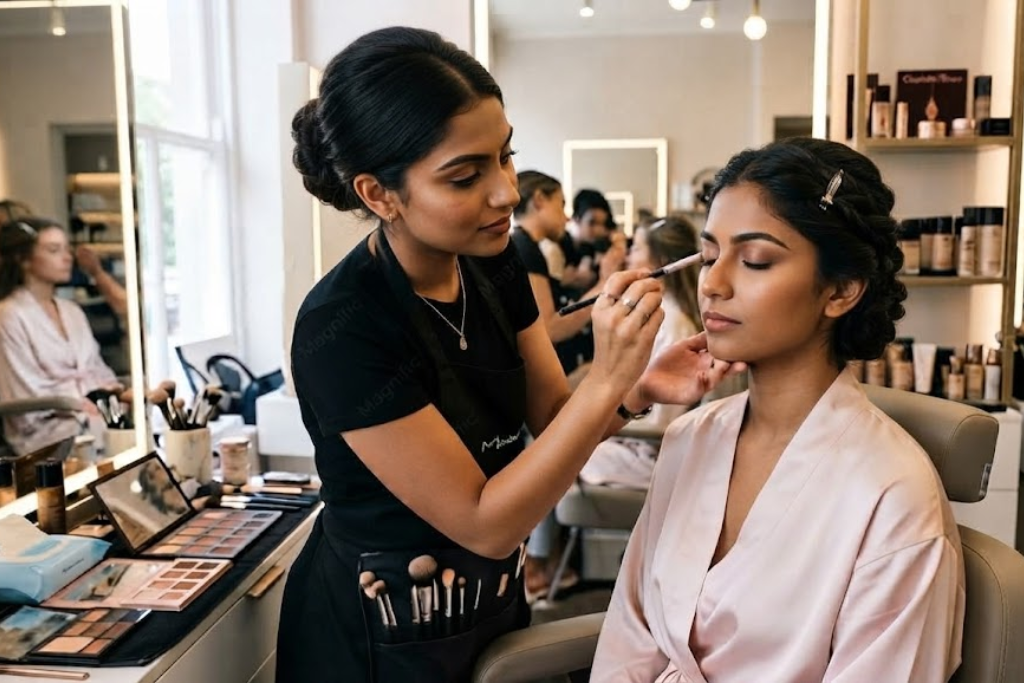
A good course should allow students to practise makeup application on different models rather than simply watching an instructor demonstrate techniques.
Practical sessions should include:
-
Skin preparation and product application.
-
Foundation matching and blending.
-
Contouring and highlighting.
-
Eye makeup application.
-
Lip shaping and colour selection.
-
Complete bridal makeup looks.
-
Makeup correction and finishing techniques.
The more practical exposure you receive, the better prepared you will be to handle real bridal assignments.
4. Evaluate the Experience and Expertise of Trainers
The quality of instruction can significantly influence your learning experience. Therefore, it is important to research the trainers who will teach the course. An experienced makeup educator should have a strong understanding of professional makeup techniques, product knowledge, current bridal trends, and client requirements.
Consider the following points before enrolling:
-
Check the trainer's professional makeup portfolio.
-
Review their bridal makeup experience.
-
Look at photographs of their previous work.
-
Understand their teaching approach.
-
Check whether they provide individual guidance.
-
Ask about their experience in handling different bridal looks.
It is also helpful to review student testimonials and feedback from previous batches.
5. Review the Course Curriculum and Learning Modules
A structured curriculum ensures that students learn makeup artistry step by step, starting with the basics and progressing towards advanced techniques. Before choosing a bridal makeup course, request a detailed syllabus and check whether it includes the following modules.
|
Training Module |
What You Should Learn |
|
Skin Preparation |
Skin types, cleansing, moisturising, and priming |
|
Product Knowledge |
Foundations, concealers, powders, and makeup tools |
|
Colour Theory |
Undertones, colour correction, and shade selection |
|
Face Makeup |
Contouring, highlighting, and blending |
|
Eye Makeup |
Smokey eyes, cut creases, and advanced blending |
|
Bridal Makeup |
Traditional, HD, and customised bridal looks |
|
Airbrush Makeup |
Equipment handling and application techniques |
|
Hygiene and Safety |
Brush cleaning, sanitisation, and product safety |
|
Client Consultation |
Understanding preferences and recommending suitable looks |
A well-organised curriculum should also introduce students to professional makeup practices, time management, and client communication.
6. Compare Course Duration and Training Flexibility
Bridal makeup training programmes may range from short-term workshops to comprehensive professional courses. The right option depends on your existing experience, learning requirements, and career objectives.
For example:
Beginner Courses: Suitable for individuals who have little or no previous makeup experience. These programmes generally focus on makeup fundamentals and basic application techniques.
Advanced Makeup Courses: Suitable for students who already understand basic makeup application and want to improve their technical skills.
Professional Bridal Makeup Courses: These programmes generally cover bridal looks, advanced techniques, practical assignments, and professional makeup practices.
Do not assume that a longer course is automatically better. Instead, evaluate whether the available duration provides enough time for demonstrations, practice, feedback, and skill development.
7. Check Whether the Academy Provides Professional Certification
A certificate demonstrates that you have completed a particular training programme. However, its value depends on the academy's reputation, course quality, and the skills you have developed.
Before enrolling, ask the academy:
-
Will students receive a certificate after completing the course?
-
What are the course completion requirements?
-
Is the certificate issued by the academy or an affiliated organisation?
-
Does the programme include practical assessments?
-
Will students receive guidance after course completion?
It is important to remember that a certificate alone does not guarantee professional success. Your practical abilities, portfolio, communication skills, and client satisfaction will play a major role in building your career. Choose an academy that focuses on both professional knowledge and hands-on learning.
8. Examine the Makeup Products, Tools, and Equipment Provided
A good course should introduce students to professional makeup products, brushes, sponges, blending tools, and specialised equipment.
Check whether the academy provides:
-
Professional makeup kits.
-
Different foundation shades.
-
Concealers and colour correctors.
-
Makeup brushes and blending sponges.
-
Eyeshadow palettes and lip products.
-
Primers, setting powders, and setting sprays.
-
Airbrush equipment, if included in the syllabus.
Also, ask whether the makeup kit is included in the course fee or needs to be purchased separately. You should also receive proper guidance on cleaning brushes, sanitising tools, checking product expiry dates, and maintaining hygienic working conditions.
9. Review Student Work, Portfolio, and Academy Reputation
An academy's previous work can provide valuable insight into the quality of its training. Before making your final decision, explore its website, social media profiles, and student portfolios.
Pay attention to:
-
Bridal makeup looks created by students.
-
Before-and-after makeup transformations.
-
Different bridal styles and techniques.
-
Student feedback and testimonials.
-
Photographs of practical training sessions.
-
Professional work completed by trainers.
If possible, speak with former students to learn about their training experience, practical exposure, teaching quality, and post-course support. An academy with transparent information and genuine student work can help you make a more informed decision.
10. Understand the Course Fees and What They Include
Course fees are an important consideration, especially for beginners who are investing in professional training for the first time. However, selecting the cheapest available course may not always be the best decision.
Instead of comparing prices alone, understand what you receive in return.
Check whether the course fee includes:
-
Complete theoretical and practical training.
-
Professional makeup demonstrations.
-
Practice sessions on models.
-
Makeup products and tools.
-
Course materials.
-
Certification.
-
Portfolio development.
-
Post-training guidance.
A transparent fee structure helps you understand the total investment required to complete your training. Think of professional makeup education as a long-term investment in your skills and career rather than simply an expense.
Common Mistakes to Avoid When Choosing a Bridal Makeup Course
While comparing different training programmes, beginners sometimes make decisions based on limited information.
Here are some common mistakes worth avoiding:
-
Choosing only by price: A low course fee does not necessarily mean better value. Evaluate the curriculum and practical training.
-
Ignoring practical sessions: Watching demonstrations without practising can limit your ability to develop professional skills.
-
Not checking the trainer's portfolio: Always review the trainer's work and teaching experience.
-
Overlooking hygiene training: Proper sanitisation and product handling are essential in professional makeup artistry.
-
Ignoring student feedback: Reviews from previous students can help you understand the actual training experience.
-
Expecting immediate career success: Completing a course is only the beginning. Consistent practice and portfolio development are equally important.
Making an informed decision can help you avoid unnecessary expenses and choose training that supports your long-term goals.
Conclusion
Choosing the best bridal makeup course is an important step towards building a successful career in professional makeup artistry. The right training programme should offer a balance of theoretical knowledge, practical experience, advanced makeup techniques, product understanding, and professional guidance.
Before enrolling, carefully evaluate the academy's reputation, trainer expertise, course curriculum, certification, practical sessions, and fee structure. Institutes such as New Image Institutes can be considered when exploring professional makeup training options.
Remember, becoming a skilled bridal makeup artist takes time, patience, creativity, and continuous learning. The right professional course can provide the foundation needed to turn your passion for makeup into a rewarding career.
Frequently Asked Questions
1. Which bridal makeup course is best for beginners?
A comprehensive professional bridal makeup course is a suitable option for beginners. Look for a programme that covers basic makeup techniques, skin preparation, product knowledge, HD makeup, bridal looks, hygiene, and practical training.
2. How long does it take to learn bridal makeup professionally?
The duration depends on the course structure, learning level, and practical training provided. Short workshops may cover selected techniques, while comprehensive professional programmes offer more extensive training. Consistent practice after completing the course is also important.
3. What qualifications are required to become a bridal makeup artist?
Most entry-level makeup training programmes do not require a specific academic qualification. An interest in makeup, creativity, dedication, and willingness to learn are useful starting points.
4. Is practical training important in a bridal makeup course?
Yes. Practical training helps students understand different skin types, face shapes, makeup products, blending techniques, and client requirements. Working on models also builds confidence before handling professional assignments.
5. What should I check before joining a makeup academy?
Review the course syllabus, trainer experience, practical training facilities, student portfolios, certification, makeup kit, course fees, and post-training support. These factors can help you identify a programme that matches your learning and career goals.